



What does challenging behaviour mean?
- There are some ‘behaviours’ which are not common or inevitable when a person develops dementia. But they do occur occasionally and are described as ‘challenging behaviours’.
- These behaviours are often signs that someone is trying to communicate a need that they have. But we, as carers, have been unable to recognise or address the need they have. For example:
- A person has been showing signs of needing to go to the toilet and now they have had an ‘accident’ and have become distressed. They are pulling at their wet clothing and have started to bang on the furniture. They hit out at anyone nearby and can not be pacified.
- This is an example of when a person had a need; it was not identified and so was not met. This has left the person feeling distressed, uncomfortable, humiliated and angry.
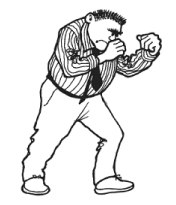
What does challenging behaviour look like?
- Here are some more examples of behaviours that challenge the person with dementia and their carer(s). They can also be seen as expressions of a need that has not been met:
- Wandering or walking. The term ‘wandering’ is often used to describe a person walking about in a seemingly aimless fashion, looking for something or someone. We might more properly describe the activity as walking, not wandering. The person with dementia may have a purpose when walking – but the challenge for the carer is to understand what the purpose is and how to resolve the need to walk.
- Aggressive behaviour (such as hitting out, spitting, scratching, swearing) may, in some circumstances, be a normal response to a difficult situation. It may be that the person behaves in this way because they are trying to communicate a host of emotional or physical problems.
- Passive behaviour (such as sitting for long periods staring into the distance, not joining in with contact with others). When a person sinks into very passive behaviour they become uncommunicative and no longer engage in the world around them. They seem to have ‘opted out’ of life.
- Not eating and drinking, consequently at risk of losing weight and dehydration. Malnourishment is not an inevitable part of dementia but weight loss often accompanies the disease. Dehydration can occur rapidly with a person who has dementia with memory loss. Dehydration can cause a person to become very confused and display behaviours which may be mistakenly diagnosed as being psychotic.
What to do?
- Walking: Consider whether the person is walking to look for interest and companionship. Are they wanting to continue walking outside each day because it has been their habit to do this? Can this continue? Can the person you care for be included in purposeful activity?
- Aggression: Have a look for triggers that might prompt a reaction. Watch for signs of agitation. Ask yourself if the person’s basic needs for warmth, food, fluid, rest, affection, respect, privacy and dignity are being met. Are they in pain, bored, frustrated?
- Passive behaviour: Try to include the person in day-to-day activities so that they are not isolated from the world around them. When did they last join in activity that prompted pleasant memories, sharing past achievements and family events? Ask for a medical opinion and assessment if depression is suspected.
- Weight loss and dehydration: Regularly monitor a person’s food and fluid intake. Try to find out what the person weighs and monitor this as an accurate measure. Incorporate the person’s choices, preferences and habits when designing mealtimes. Be aware of the common signs of dehydration so that intervention can be instigated soon.
© Guideposts Trust Ltd. Registered Charity no. 272619 – not to be
reproduced without prior permission